
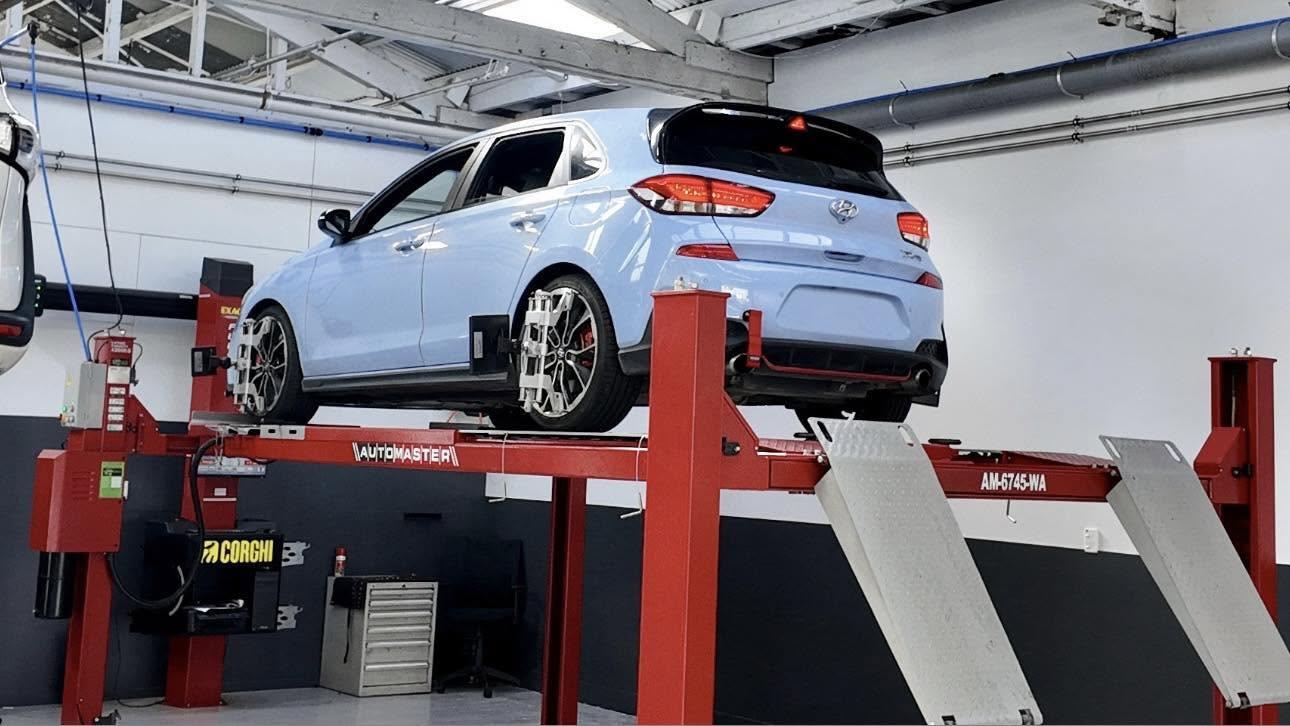
New Zealand's legal minimum tread depth for a WOF is 1.5 mm in the main grooves, all the way round the tyre. GVI Service Centre in Penrose supplies and fits tyres, repairs punctures, rotates and balances wheels and checks wheel alignment, and we read the wear pattern so we fix the cause, not just the symptom.
Your tyres are the only part of the vehicle that touches the road, so their condition affects braking, handling, wet-weather grip, fuel or battery use and, of course, your WOF. We supply and fit tyres, repair punctures and set up your wheels so they wear evenly, and we check the parts that make tyres wear badly in the first place.
Signs you need new tyres or an alignment
- Tread close to the wear indicators. The small raised bars in the grooves (look for TWI on the sidewall) show when a tyre is near the legal limit.
- Cracks, bulges or cuts in the sidewall, or tyres that look perished with age.
- The vehicle pulls to one side on a straight, flat road.
- The steering wheel sits off-centre when you are driving straight.
- Uneven wear, especially on the inner or outer edge of the tread.
- Vibration at speed, which often means wheels need balancing.
- Repeated pressure loss or a tyre-pressure warning light.
Tread depth: the rule and the advice
For a WOF, light vehicle tyres need at least 1.5 mm of tread in the main grooves, around the whole circumference. That is the legal minimum. Many tyre makers and road-safety groups suggest replacing tyres earlier, at around 3 mm, because wet-weather grip and stopping distances fall away well before the legal limit. That is advice rather than a rule, but it is worth knowing when you are deciding whether to wait.
What we do
- Supply and fit. We recommend options to suit your vehicle, how you drive and your budget, and quote before we fit.
- Puncture repairs where the damage is in a repairable part of the tread.
- Rotation and balancing to even out wear and remove vibration.
- Wheel alignment checked and adjusted in-house.
- Pressures and monitoring systems set and checked.
Why alignment matters
When wheels are not pointing quite where they should, the tyres scrub along the road instead of rolling. That wears tyres out quickly, can make the car pull or wander, and costs you fuel or EV range. Alignment can go out after hitting a kerb or pothole, after suspension work, or just through gradual wear.
An alignment only holds if the parts behind it are sound. Worn bushes, ball joints or tie-rod ends make it impossible to hold a setting, so we check the suspension and steering first and tell you if something needs replacing before the alignment will last.
Electric and hybrid tyres
EVs are heavier than similar petrol cars and deliver torque instantly, which can wear tyres faster, especially the driven axle. Tyres need a suitable load rating, and regular rotation helps. We pay attention to wear patterns on EVs and hybrids and recommend tyres that suit the weight and how you drive. See EV and hybrid servicing.
Frequently asked questions
What is the legal minimum tyre tread in New Zealand?
For a WOF, light vehicle tyres need at least 1.5 mm of tread in the main grooves around the full circumference of the tyre. Many tyre makers recommend replacing tyres sooner, around 3 mm, for better wet-weather grip.
How often should tyres be rotated?
Follow your manufacturer's advice. Many suggest roughly every 10,000 km, or at each service. Regular rotation evens out wear and extends the life of the set.
Do I need an alignment when I buy new tyres?
It is often a good idea, particularly if the old tyres wore unevenly, the car pulls, or you have recently had suspension work. An alignment protects the new tyres from the problem that wore out the old ones.
Can you repair a puncture?
Usually, if the damage is in the tread area and not too large or too close to the edge. Sidewall damage cannot be repaired safely. We inspect the tyre and tell you which applies.
Why does my EV wear tyres so quickly?
EVs are heavy and deliver instant torque, which puts more load on tyres. Correct pressures, regular rotation, a correct alignment and tyres with a suitable load rating all help.